

Introduction
Most workdays start with good intentions—steady focus, clear thinking, and a reasonable to-do list. But by mid-afternoon, the combination of screen fatigue, static posture, and creeping stress can turn even simple tasks into uphill battles. If you’ve ever felt your shoulders tightening or your lower back stiffening during long hours at a desk, you’re not alone.
Mindful movement is becoming a core part of modern productivity. With hybrid and remote work now the norm, more professionals are turning to desk yoga exercises as an easy, low-effort way to stay comfortable, grounded, and energized throughout the day.
This guide breaks down what desk yoga is, why it works, and how to practice simple movements you can do in two minutes or less—no mat required. Whether you’re seeking stress relief, better posture, or a refreshed mindset, these exercises can fit naturally into your daily workflow.
At a Glance: Key Takeaways
- Desk yoga helps reduce tension from long sitting sessions.
- Movements are simple, accessible, and require no equipment.
- You can complete a full routine in 3–10 minutes during breaks.
- Consistency matters more than intensity—daily micro-movements boost long-term comfort and focus.
Why Desk Yoga Matters in the Future of Work
The Rise of Hybrid Work and Body Fatigue
As more people work from home or from flexible settings, hours spent at laptops have climbed. Surveys from workplace wellness organizations in 2024 show that workers sit for an average of 7–8 hours per day, often without structured breaks. That static posture is linked to stiffness, fatigue, and a drop in cognitive performance.
Mindful Productivity = Body + Mind
Desk yoga isn’t about deep stretches or high-intensity movement. It’s about reconnecting with your body during the workday so that thinking feels lighter and tasks feel more manageable. The movements support three goals:
- Relaxing the nervous system
- Reducing muscle tension
- Improving circulation
When the body feels better, focus naturally improves.
10 Desk Yoga Exercises You Can Do Anywhere
All exercises below can be done sitting or standing. Each takes 15–45 seconds.
Seated Mountain Pose (Posture Reset)
What it is: A grounding posture to reset your alignment.
How to do it:
- Sit tall at the edge of your chair.
- Ground your feet flat.
- Lengthen your spine and relax your shoulders.
- Hold for 20 seconds while breathing steadily.
Why it matters: Helps counteract slouching and creates a foundation for the rest of your routine.
Neck Release Stretch
How to do it:
- Drop your right ear toward your right shoulder.
- Extend your left hand toward the floor for a deeper stretch.
- Hold 20–30 seconds, switch sides.
A quick scenario: This is perfect after long video calls where your shoulders creep upward without noticing.
Shoulder Rolls for Upper-Body Reset
How to do it:
- Roll both shoulders up, back, and down 8–10 times.
- Reverse direction for another 8–10.
Why it matters: Restores mobility to the upper back, where desk workers accumulate the most tension.
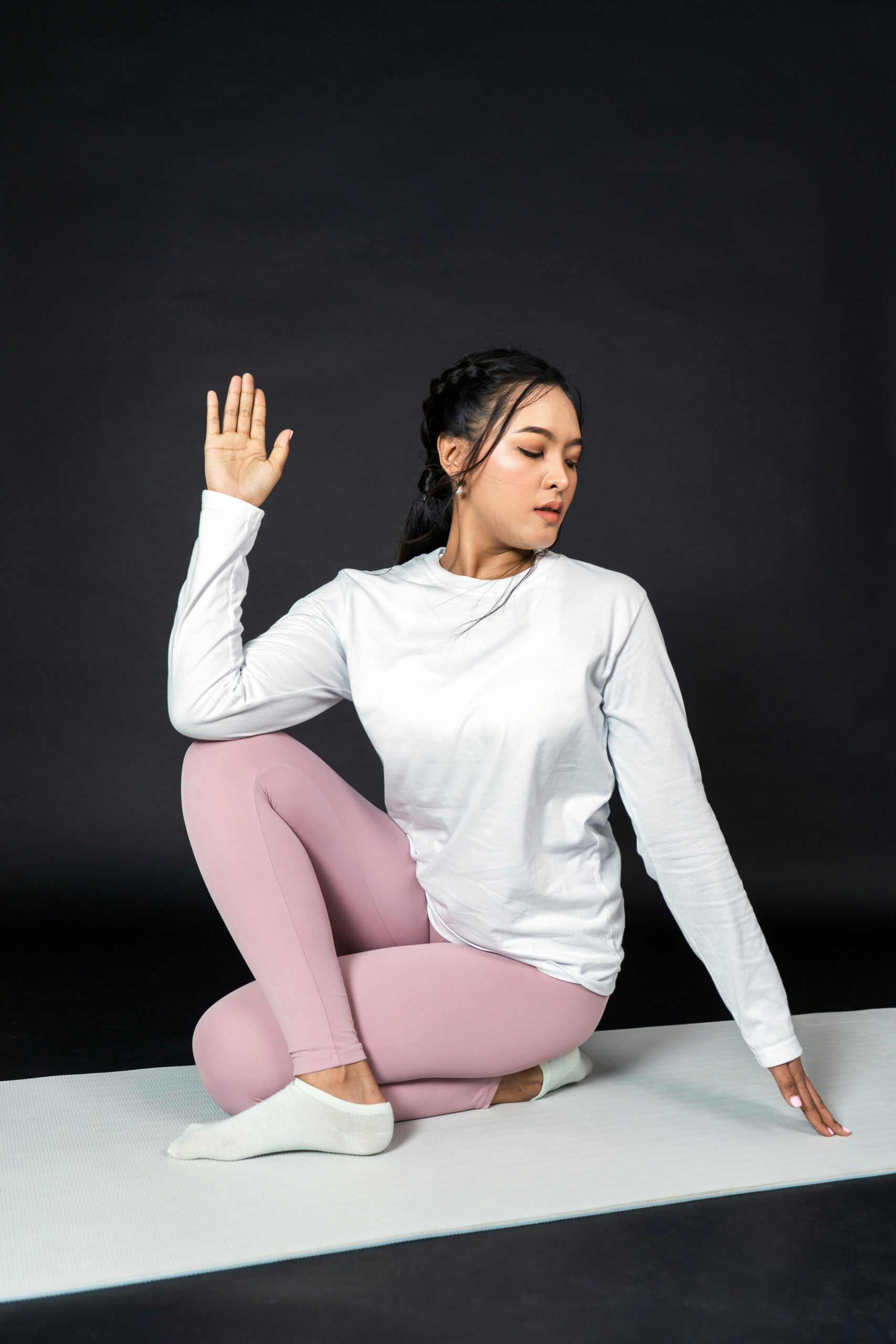
Seated Spinal Twist
How to do it:
- Place your right hand on your chair back.
- Inhale tall, exhale gently twist to the right.
- Hold 15–20 seconds. Repeat left.
Pro tip: Great as a mid-afternoon movement to refresh your energy
Wrist and Forearm Stretch
Constant typing tightens the small muscles in your hands.
How to do it:
- Extend your arm, palm facing out.
- Gently press fingers back with the opposite hand.
- Hold for 20 seconds, switch.
Cat–Cow Chair Flow
How to do it:
- Sit tall with hands on knees.
- Inhale: arch your spine (cow).
- Exhale: round your back (cat).
- Repeat 6–8 cycles.
Why it matters: Promotes spinal mobility and boosts circulation after long periods of sitting.
Seated Figure-Four Hip Stretch
How to do it:
- Cross your right ankle over your left knee in a figure-four.
- Lean forward gently until you feel a stretch.
- Hold 20–30 seconds and switch.
Scenario: Ideal for easing hip tightness that comes from long workstation hours.
Forward Fold Over Desk
How to do it:
- Stand with feet hip-width apart.
- Hinge at the hips and fold forward.
- Let your arms hang or grab opposite elbows.
- Hold 20–30 seconds.
Note: Perfect during short mental resets.
Chest-Opening Stretch (Counter the Hunch)
How to do it:
- Interlace fingers behind your back or grip your chair.
- Lift your chest and broaden your collarbone.
- Hold for 15–20 seconds.
Why it helps: Opens tight chest muscles from leaning over screens.
Desk Downward Stretch (Standing Desk Dog)
How to do it:
- Place hands on your desk edge.
- Step back until your torso forms a long line from hands to hips.
- Drop your head between your arms.
- Hold 20–30 seconds.
Pro tip: A great “full-body refresh” stretch during long work blocks.
Productivity Benefits of Desk Yoga
Improved Focus and Faster Task Switching
Gentle movement increases circulation, which supports mental clarity. Even 60 seconds of stretching can help you return to complex tasks with fresh perspective.
Reduced Stress During Heavy Workloads
Light stretching signals safety to your nervous system. That makes tight deadlines feel less overwhelming and helps prevent stress spirals.
Less Physical Discomfort, More Flow
When discomfort fades, deep work becomes more natural. A 2024 workplace wellness survey found that micro-breaks—like desk yoga—significantly improve comfort during long work blocks.
How to Make Desk Yoga a Habit
Make It Trigger-Based
Attach your routine to recurring moments:
- Before your first meeting
- After every 90–120 minutes of deep work
- After lunch
Use Gentle Reminders
Calendar nudges, phone timers, or browser alerts help keep your routine consistent.
Pair It With Mindful Breathing
Try one minute of slow breathing during your stretches. It enhances focus and relaxation without feeling like a separate task.
Keep It Simple
Don’t aim for perfection. Consistency is the real goal. Even three exercises a day can shift how your body feels.
Conclusion
Desk yoga exercises offer a practical, low-effort way to support mindful productivity and reduce daily stress. By integrating simple movements throughout your workday, you can improve focus, boost comfort, and make long hours at your desk feel more sustainable.
Start with one or two exercises this week and build from there. Use this guide as a template to design your own micro-routines. And if you’re exploring new ways to build healthier, future-focused work habits, you’ll find more related insights across ForwardCurrents.


Heard about f8bet1, so I checked it out. Looks promising! If you’re looking for some action, this place is worth a shot. Give it a go: f8bet1
Pingback: Micro Break Schedule: Remote Work Focus Template