
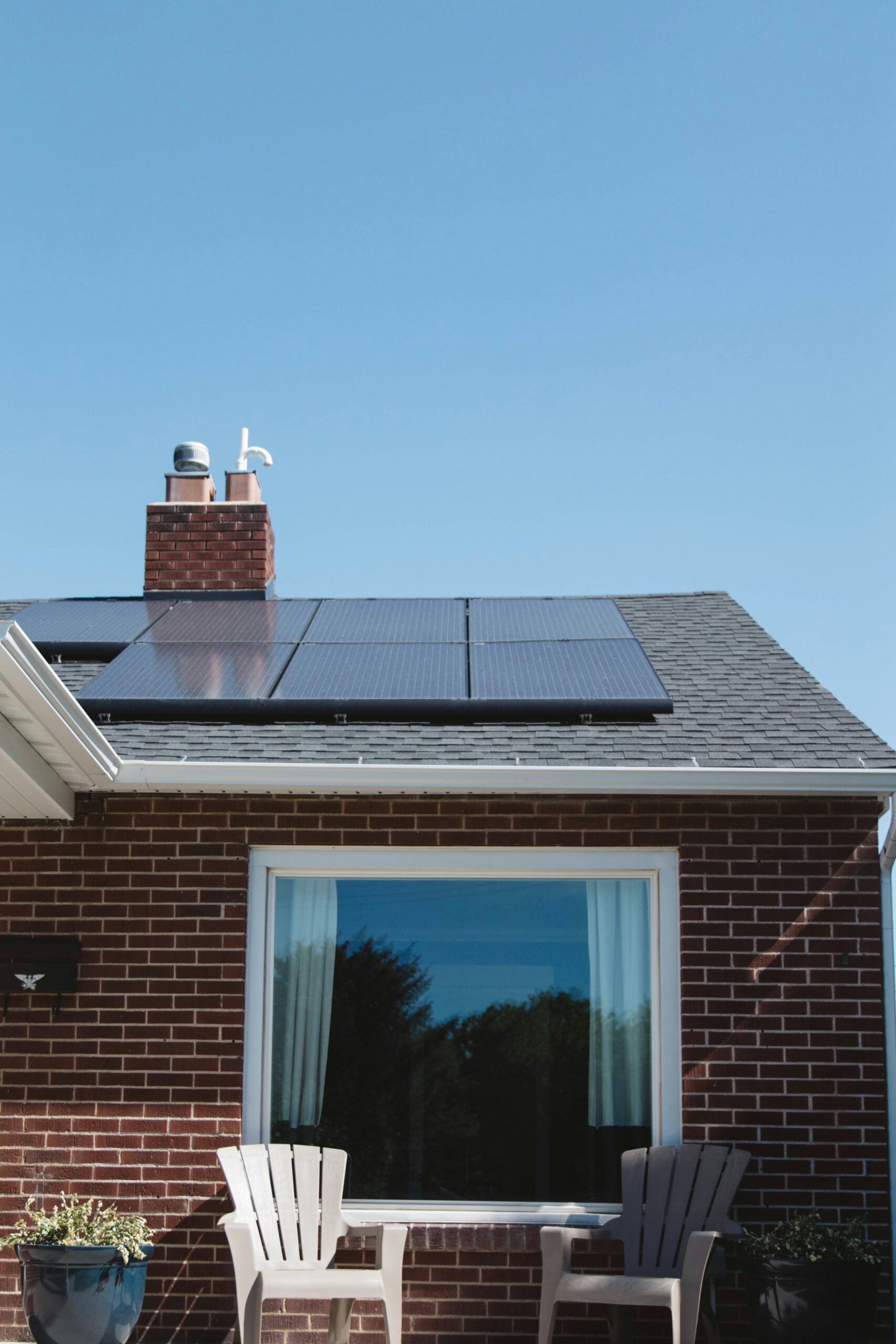
Solar panels have moved from “nice-to-have” to a practical home upgrade for many homeowners trying to lower monthly electricity bills.
If your utility costs keep creeping up year after year, you’re not alone. Energy prices have been rising in many regions, and homeowners are increasingly looking for long-term solutions rather than short-term fixes.
That’s where solar panels come in: they help you generate your own electricity, reduce your reliance on the grid, and create more predictable energy costs over time.
This guide breaks down what solar panels are, how they work, what the installation process looks like, and how to decide if they make sense for your home right now.
Solar Panels at a Glance (Key Takeaways)
If you’re short on time, here’s the quick overview:
- Solar panels convert sunlight into electricity that powers your home.
- Most homeowners use solar to reduce (not eliminate) electric bills.
- Costs vary, but many systems pay back over 7–12 years depending on location and incentives.
- The best results come from matching system size to your household’s actual energy use.
- Solar works best when combined with other upgrades like insulation and efficient appliances.
(For more on building a complete sustainable home setup, ForwardCurrents will have a deeper checklist worth exploring.)
What Are Solar Panels (And How Do They Work)?
Solar panels are devices that capture sunlight and turn it into usable electricity for your home.
Here’s the simple process:
- Sunlight hits the panels (usually installed on your roof).
- The panels produce direct current (DC) electricity.
- An inverter converts DC into alternating current (AC), which your home uses.
- Your home uses solar energy first, and any extra power may go back to the grid.
- At night or on cloudy days, you still draw electricity from the utility.
Think of it less like “going off-grid” and more like offsetting the most expensive part of your energy use.
Why Solar Panels Reduce Electricity Bills
Solar panels reduce bills by lowering the amount of electricity you need to buy from your utility company.
Most homeowners save money through three main mechanisms:
1. Using Your Own Power During the Day
If your household runs appliances, HVAC, or electronics during daylight hours, solar can cover a big portion of that usage.
2. Net Metering (Where Available)
In many areas, utilities credit you for excess solar energy sent back to the grid.
Policies vary widely, so it’s worth checking local rules. (ForwardCurrents will later cover regional solar policy basics in a dedicated explainer.)
3. Long-Term Price Stability
Electricity rates tend to rise over time. Solar gives you more control and predictability.
A 2024 report from the International Energy Agency noted that solar is one of the fastest-growing energy sources globally, largely because costs have dropped significantly over the last decade.
Step-by-Step: How to Get Solar Panels for Your Home
Solar can feel complicated at first, but the process is fairly structured.
Step 1: Review Your Current Electricity Use
Start with your last 12 months of utility bills.
Look for:
- Average monthly kWh usage
- Seasonal spikes (summer cooling, winter heating)
- Your current cost per kWh
Mini example:
If your home uses 900 kWh/month and your rate is $0.18/kWh, that’s about $162/month.
Solar sizing starts here.
(For a deeper budgeting-style breakdown, a future ForwardCurrents guide on sustainable home ROI could help.)
Step 2: Check Your Roof and Sun Exposure
Solar works best with:
- South- or west-facing roof space (in many regions)
- Minimal shade from trees or nearby buildings
- Roof condition that won’t require replacement soon
If your roof is older, it may be smart to replace it before installation.
Rule of thumb:
If your roof has less than ~10 years left, address that first.
Step 3: Decide Between Grid-Tied, Hybrid, or Off-Grid Systems
Most homeowners choose one of these:
Grid-Tied (Most Common)
- Connected to utility grid
- Lowest cost
- Bills drop, but you still rely on grid at night
Hybrid (Solar + Battery)
- Includes battery storage
- More resilience during outages
- Higher upfront cost
Off-Grid (Rare for Suburbs)
- Fully independent
- Requires large batteries and backup systems
- Usually only practical in remote areas
For most homeowners focused on lowering bills, grid-tied solar is the starting point.
Step 4: Understand Costs and Payback
Solar panel system costs depend on:
- System size (kW)
- Equipment quality
- Installation complexity
- Incentives or rebates
Typical homeowner ranges globally might look like:
- Small system: 3–5 kW
- Medium system: 6–9 kW
- Large system: 10+ kW
Payback often falls between 7 and 12 years, but incentives can shorten that.
The key is comparing:
- Monthly loan/payment (if financed)
- Monthly utility savings
- Total lifetime output (20–30 years)
Step 5: Get Quotes From Multiple Installers
Avoid signing the first offer.
A good process:
- Get 3 quotes
- Ask for projected annual production
- Compare warranty terms
- Confirm what’s included (permits, monitoring, maintenance)
Template questions you can copy/paste:
- “What is the estimated yearly kWh output?”
- “Does this quote include permitting and grid connection?”
- “What inverter and panel brands are included?”
- “What happens if production is lower than expected?”
tep 6: Plan for Installation and Monitoring
Most installations take only a few days, but approvals can take weeks.
After installation, you’ll typically get an app/dashboard showing:
- Daily production
- Household usage
- Exported power to grid
Monitoring helps you adjust habits, like running laundry midday when solar is strongest.
Common Mistakes Homeowners Make With Solar Panels
Solar Panel works best when expectations are realistic.
Mistake 1: Oversizing the System
Bigger isn’t always better. Match solar output to your actual usage.
Mistake 2: Ignoring Efficiency Upgrades First
Solar is powerful, but reducing consumption first is often cheaper.
Examples:
- LED lighting
- Better insulation
- Efficient heat pumps
Mistake 3: Not Understanding Local Policies
Net metering and buyback rates differ widely.
Mistake 4: Treating Solar Like a Quick Fix
Solar is a long-term investment, not an overnight bill eliminator.
Real-World Scenarios (Mini Case Studies)
Case Study 1: The High Summer Bill Home
A homeowner running air conditioning heavily sees bills jump to $250+ in summer.
Solar offsets peak daytime cooling, reducing the most expensive months.
Case Study 2: The Work-From-Home Household
Someone home all day uses more daytime electricity.
Solar becomes even more valuable because more power is consumed directly instead of exported.
Case Study 3: The Outage-Prone Neighborhood
A homeowner adds a small battery to cover essentials (fridge, lights, Wi-Fi).
Hybrid solar improves resilience while still lowering bills.
How to Know if Solar Panels Are Worth It for You
Solar tends to be a strong fit if:
- You plan to stay in your home 7+ years
- Your electricity rates are rising
- Your roof gets consistent sun
- You want predictable long-term costs
Solar may be less ideal if:
- Your roof is heavily shaded
- You expect to move soon
- Local incentives are limited
A simple next step is running a solar estimate and comparing it to your current annual utility spend.
Conclusion: A Smart Homeowner’s Next Step With Solar Panels
Solar panels are one of the most practical tools homeowners have today for reducing electricity bills and building long-term energy stability.
The best approach is simple:
- Understand your energy use
- Evaluate your roof and location
- Get multiple quotes
- Start with realistic savings expectations
- Pair solar with efficiency upgrades for maximum impact
If you’re considering solar, use this guide as a template to experiment with research over the next two weeks.


คุณไม่จำเป็นต้องกังวลเรื่องการโกงอีกต่อไป เพียงแค่โฟกัสไปที่เป้าหมายกำไรของคุณก็พอ เข้าสู่ระบบเว็บไซต์ตรงระดับโลกที่ผ่านการตรวจสอบอย่างเข้มงวดของเรา เพื่อเล่นสล็อตด้วยความมั่นใจ 100% เพราะเราใช้ระบบ API แท้ที่มอบผลตอบแทนตรงตามสถิติที่ระบุไว้ทุกประการ wm787online
ไม่ว่าคุณจะชนะรางวัลหลักหมื่นหรือหลักล้าน ยอดเงินรางวัลสุทธิจะถูกโอนเข้าบัญชีของคุณทันทีโดยไม่มีข้อแม้ wm787play
คุณสามารถถอนเงินรางวัลได้อย่างมั่นใจทุกเวลาที่ BETFLIK168 ด้วยระบบฝาก-ถอนอัตโนมัติที่ดำเนินการเสร็จสิ้นภายในเวลาเพียง 15 วินาที BETFLIK168 ใช้ระบบอัตโนมัติสำหรับทุกธุรกรรม https://wm787playgo.xyz/