
Introduction
You buy the bamboo toothbrush. You try the refillable soap. Maybe you even test shampoo bars. And then… half of it ends up unused under the sink.
That’s the real challenge with low waste bathroom swaps: not finding them — actually sticking with them. Most people don’t fail because they don’t care about sustainability. They fail because the swap doesn’t fit their real routine, time pressure, or budget.
This matters right now because bathroom products are still heavily tied to single-use packaging. Packaging alone accounts for a huge share of global plastic waste, and personal care routines are part of that daily stream of disposable materials.
In this guide, you’ll get a practical checklist of low waste bathroom swaps that people realistically keep using, plus a decision framework so you can pick swaps that match your life — not an idealized zero-waste version of you.
At a Glance: The Low Waste Bathroom That Actually Works
Focus on swaps that are:
- Equal or better in performance
- Easy to buy or refill
- Habit-compatible (no extra steps)
- Cost-neutral over 3–6 months
Start here first (highest success rate):
- Refillable hand soap
- Reusable cotton rounds or washcloths
- Solid or refill deodorant
- Refillable cleaning products
- Toothpaste tablets (if texture works for you)
Why Low Waste Bathroom Swaps Often Fail (And How to Fix That)
Many plastic-free bathroom guides assume motivation is the only barrier. In reality, three things determine success:
1. Friction beats good intentions
If a product adds steps — mixing powders, long drying times, special storage — most people stop using it.
2. Performance must match or exceed old habits
If your hair feels worse, your skin breaks out, or shaving takes longer, the swap won’t last.
3. Availability matters
If you can’t easily reorder or refill, you’ll revert to default products.
The goal isn’t perfection. It’s durable habit change.
The Most Practical Low Waste Bathroom Swaps (Checklist)
Tooth & Oral Care
✔ Swap: Toothpaste tablets or powder
Why it works:
- Eliminates plastic tubes
- Travel-friendly
- Long shelf life
Realistic adjustment period: 1–2 weeks
Decision tip:
If you hate chalky texture → try tablets with fluoride coating or switch to metal-tube toothpaste instead.
Example scenario:
Remote worker → keeps jar on desk to build brushing habit after lunch.
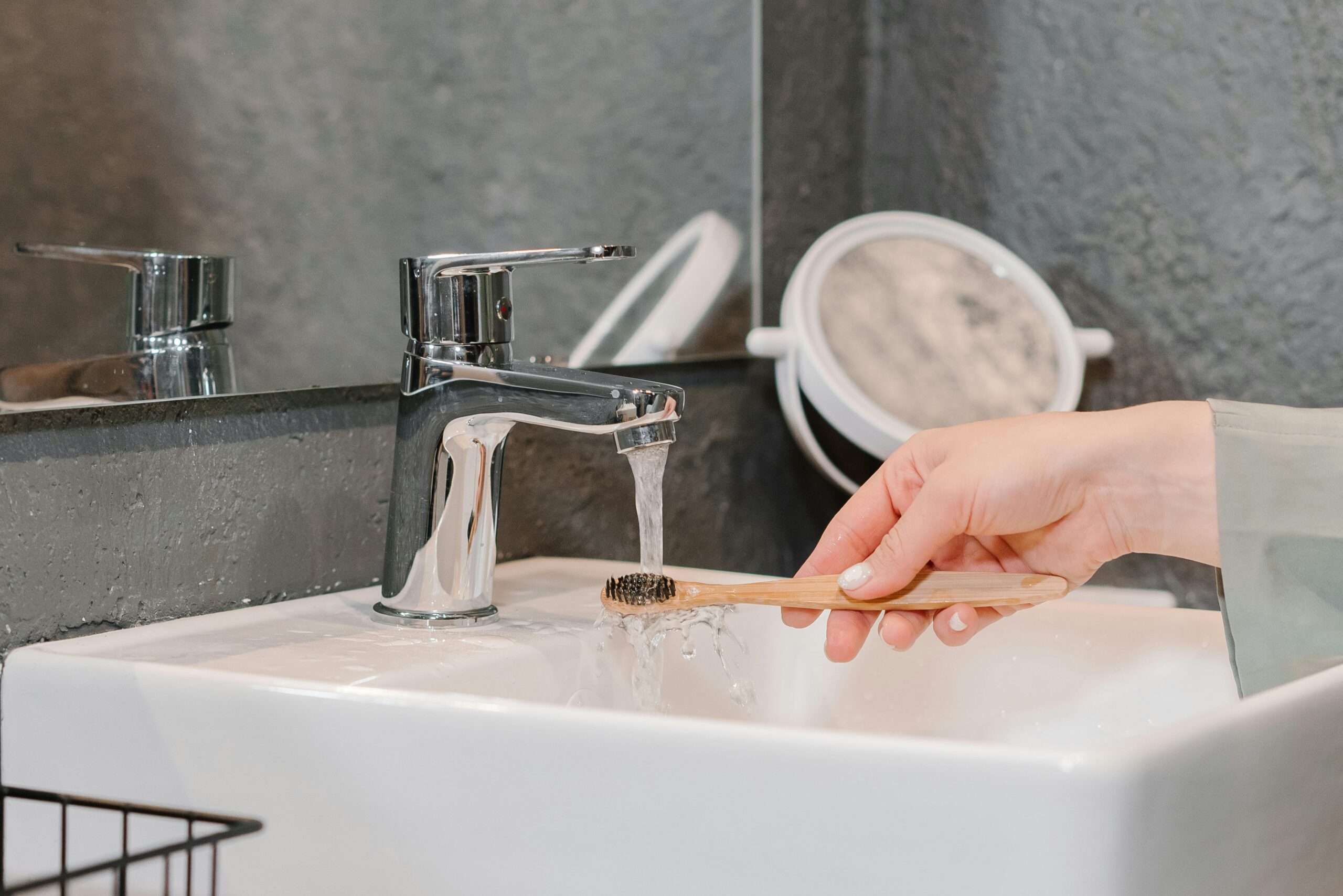
Swap: Bamboo or replaceable-head toothbrush
Why it works:
- Same behavior, different material
- Zero learning curve
Upgrade option:
Electric brush with replaceable heads (less plastic long term).
Shower & Body
✔ Swap: Refillable or bulk body wash
Why it works:
- Same product format
- Lower behavior change
Recent market trends show refillable and reusable packaging systems are one of the fastest-growing segments in personal care packaging.
Execution tip:
Buy 1–2 liter refill instead of pump bottles.
Swap: Shampoo bars (with realistic expectations)
Why it sometimes fails:
Hard water + thick hair can make transition harder.
How to make it stick:
- Store on draining soap dish
- Give 2-week scalp transition window
- Try once-weekly clarifying rinse if needed
Swap: Safety razor (if shaving regularly)
Why it works:
- Long lifespan
- Lower lifetime cost
- Less plastic waste
Reality check:
Best for people who shave at least weekly (otherwise learning curve feels unnecessary).
Skin & Personal Care
✔ Swap: Reusable cotton rounds or cloth pads
Why it works:
- Zero performance drop
- Easy laundry integration
Mini case:
Many people add them to towel laundry → zero extra load → long-term adoption.
✔ Swap: Refillable deodorant or solid stick
Why it works:
- Daily-use product
- Immediate plastic reduction
Decision rule:
If natural formulas irritate skin → switch to refillable mainstream brand instead of forcing natural-only.
Cleaning & Misc
✔ Swap: Refillable bathroom cleaner tablets
Why it works:
- Uses existing spray bottle
- Saves storage space
- Easy subscription ordering
Innovation trends show growing adoption of waterless or solid formats like tablets and pods to reduce packaging waste across toiletries.
The “Actually Used” Decision Framework
Before buying any plastic free bathroom product, ask:
Step 1 — Will this replace something you use weekly?
If not → skip.
Step 2 — Does it add steps?
If yes → friction risk = high.
Step 3 — Can you reorder in under 2 minutes?
If not → long-term failure risk.
Example Low Waste Bathroom Starter Setup (Realistic Version)
Month 1 — Zero Learning Curve
- Refillable hand soap
- Reusable cotton rounds
- Bamboo toothbrush
Month 2 — Medium Change
- Refillable body wash
- Refillable cleaning tablets
Month 3 — Lifestyle Shift
- Toothpaste tablets
- Shampoo bar (if compatible)
This staged approach prevents “eco burnout.”
Mini Case Studies (Realistic Scenarios)
Case 1: Busy Parent
Success swaps:
- Refillable soap
- Reusable wipes
- Bulk shampoo refill
Failed swap:
- Powder toothpaste (too messy mornings)
Lesson: Convenience first, ideology second.
Case 2: Frequent Traveler
Success swaps:
- Toothpaste tablets
- Solid deodorant
- Solid shampoo
Lesson: Travel friction makes solid formats easier to adopt.
Case 3: Small Apartment Living
Success swaps:
- Concentrated cleaner tablets
- Multi-use solid soap
- Stackable refill pouches
Lesson: Space savings drives long-term use.
What Makes These Swaps Matter (Beyond Personal Impact)
Bathroom products often contain hidden plastics or microplastics that wash directly into waterways. Even small habit changes scale when millions of households participate.
At the same time, the beauty and personal care sector produces massive amounts of packaging annually, which is why refill and reuse models are expanding across the industry.
The shift isn’t about eliminating products — it’s about redesigning delivery systems.
Common Mistakes to Avoid
Trying to replace everything at once
Result: overwhelm → abandonment.
Choosing aesthetics over usability
Pretty packaging ≠ habit compatibility.
Assuming expensive = more sustainable
Often refill + mainstream product beats niche eco product.
Your 10-Minute Low Waste Bathroom Audit
Open your bathroom cabinet and ask:
- Which items do I use daily?
- Which create the most packaging waste?
- Which have easy refill or reusable alternatives?
Start with one category.
Conclusion
The best low waste bathroom swaps are not the most extreme ones — they’re the ones that survive real life. The biggest wins usually come from refillable systems, reusable basics, and solid formats that reduce packaging without adding friction.
If you remember one thing: choose swaps that match your habits, not your ideals.


Pingback: Best Zero Turn Lawn Mower: 2026 Buyer’s Guide